
Bowling Club: Realistic 3D PvP
BoomBit GamesSports
4.51.69K Reviews
- Version
- 1.18.3
- Installs
- 1.00M
- Age Rating
- Everyone
Screenshots
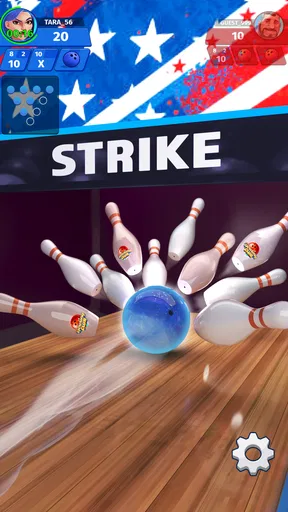
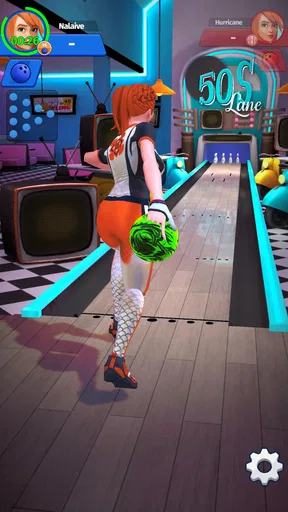
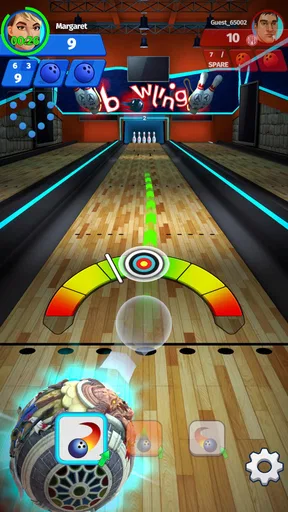
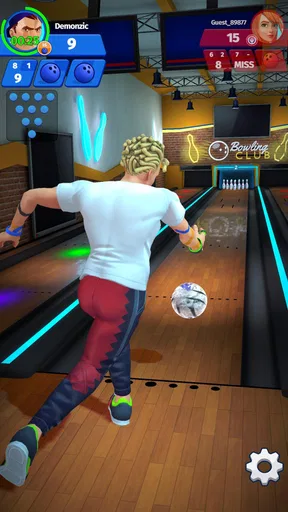
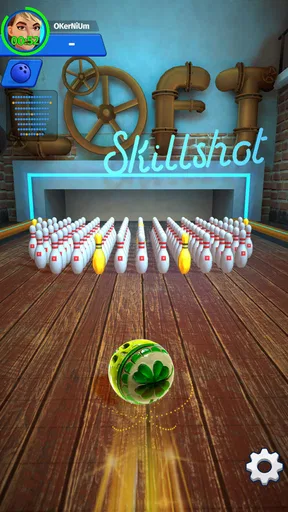

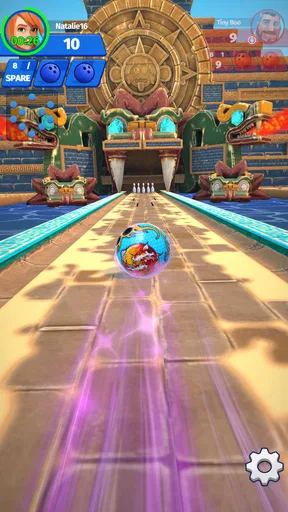
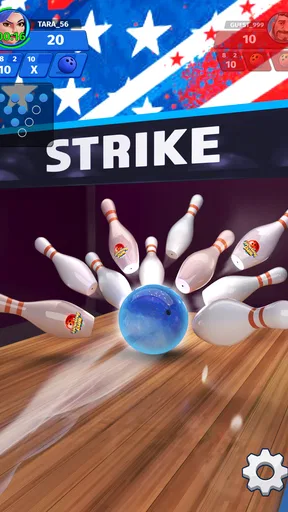
Our Review of Bowling Club: Realistic 3D PvP
 Analysis by Appyee
I went into Bowling Club: Realistic 3D PvP expecting a quick bowling game, and that is exactly where it works best: as a focused sports game that turns a familiar lane into a short competitive challenge. The presentation aims for a convincing three-dimensional bowling feel, while the real-time player-versus-player format gives each throw more pressure than a solo practice mode would.
What stood out to me first was how quickly the game communicates its purpose. You are not wandering through a large sports hub or learning a complicated set of systems before reaching the lane. The central appeal is immediate competition, customization, and the satisfaction of improving your delivery. That directness makes it easy to recommend for short sessions, especially when I only have a few minutes and want something more involved than a passive time-killer.
Developed by BoomBit Games, this free sports title is aimed at a broad audience and carries an Everyone age rating. It is available for devices running Android 7.0 or later, and its current version is 1.18.3. The game has built a sizeable audience, with over a million installs and an average rating of 4.5 from around fifty thousand ratings, which suggests that its simple premise has found plenty of players.
How the presentation turns a bowling lane into a small competitive world
I find the lane works best as more than a backdrop: its clear geometry helps me think through a shot while the live opponent gives each result immediate context. That combination makes even a brief match feel like a small event, rather than a string of pin animations. Next, it’s worth looking at how the presentation supports those decisions without needing a sprawling sports world.
A first impression built around quick decisions
The strongest part of the opening experience is its lack of unnecessary distance between the player and the sport. Bowling is already easy to understand: line up, choose how to deliver the ball, and watch the result. The game benefits from that familiar foundation because its competitive layer can concentrate on timing, control, and reading the situation instead of explaining a complicated rulebook.
I also like that the three-dimensional presentation supports the activity rather than trying to overwhelm it. The lane, pins, ball movement, and opponent-facing structure all help maintain the feeling that a single throw matters. This is important in a mobile sports game. If the screen becomes too busy, the player starts thinking about menus and effects instead of the shot. Here, the bowling action remains the visual anchor.
The real-time PvP focus changes the emotional temperature. A casual solo throw can be entertaining, but a live contest makes a spare feel valuable and a missed pocket feel costly. I found myself paying closer attention to the shape of each attempt because the result is not just a personal score; it affects the match unfolding against another player.
That also means the game is better suited to people who enjoy light competitive tension than to players looking for a quiet simulation. Someone who wants a completely relaxed bowling sandbox may find the head-to-head structure more demanding than expected. The title is approachable, but its appeal comes from having something to prove on every lane.
The visual language keeps the setting readable
The setting is deliberately contained. Rather than presenting bowling as part of a huge fictional world, the game treats the bowling environment itself as the place where the drama happens. The lane becomes a stage, the pins become the immediate target, and the opponent gives the scene a clear human context.
That narrow setting is a strength because it gives the art direction a coherent job. The visuals do not need to invent a sprawling story or a cast of characters to make a round feel meaningful. They need to make the ball’s path understandable, make the pins satisfying to hit, and keep the player aware of the match state. In my experience, that kind of visual discipline is more useful than decorative detail that has no effect on play.
Customization also fits naturally into this world. It gives the player a way to make the experience feel more personal without changing bowling into a different genre. The trade-off is that customization can become less interesting if you mainly care about pure technique. For me, it works best as a small layer of ownership: I can make the game feel like my version of the bowling club, then return to the lane where the actual contest is decided.
A useful habit is to treat the visual setup as information rather than decoration. Before rushing into a throw, I pay attention to the lane perspective and use the alignment view to think about the intended contact point. Even without turning the game into a technical simulator, this slows down impulsive shots and makes the result feel more connected to the decision I made.
Sound and rhythm make short sessions feel complete
Bowling has a naturally satisfying rhythm: prepare, release, wait, and react. A mobile game can easily damage that rhythm by filling every pause with clutter, but this one benefits from allowing the throw itself to remain the main event. The moment between release and impact is especially important because it creates anticipation without requiring a long match structure.
The sound design matters here even when the player is not consciously analyzing it. The movement toward the pins, the collision, and the reaction afterward help separate a clean strike from a disappointing attempt. In a game built around repeated throws, those small audio signals give each result a sense of weight. Without them, the action would risk feeling like a purely visual calculation.
The pacing is most effective when I approach a match as a series of compact decisions rather than as an extended sports broadcast. I can play a few rounds during a break, concentrate on one opponent, and stop without feeling that I have abandoned a large campaign. That makes the game a practical fit for commuting, waiting rooms, or a short evening session when I want competition without committing to a long game.
There is a downside to this structure. Players who prefer slower, highly detailed sports simulations may find the pace too compressed or the repeated lane action too narrow. The game asks me to enjoy refinement within one activity. It does not try to provide the variety of a broader sports collection, and that focus will either feel refreshing or limiting depending on what I expect from a mobile sports title.
I recommend playing with a stable connection when possible, because live competition is central to the experience. A delayed or interrupted match can undermine the careful rhythm that makes the game enjoyable. This is not a criticism of bowling itself; it is a consequence of choosing real-time PvP instead of a purely offline format.
Where the mechanics and presentation fit together
The game works because its mechanics support the mood established by the setting. A competitive bowling match needs enough control to make the player feel responsible for the outcome, but it also needs to remain accessible to someone who is not already familiar with bowling techniques. The best sessions sit between those two points: I understand what I am trying to do immediately, yet I still have room to make better decisions.
One of the more useful ways to approach the game is to stop treating every throw as a chance for a dramatic strike. Aiming for a reliable result can be smarter than chasing an aggressive angle, especially when the match situation rewards consistency. That mindset is easy to overlook because the visual payoff of a strike is so appealing, but controlled play gives the competitive format more depth.
I also find it helpful to separate two kinds of improvement. The first is mechanical: learning how the ball responds to my release and aim. The second is strategic: deciding when to take a safer line and when the score demands more risk. If I focus only on flashy shots, I can mistake luck for progress. If I pay attention to both, each match becomes a small lesson rather than a sequence of isolated wins and losses.
Customization should be considered alongside that learning process, not as a substitute for it. Personalizing the experience can make returning to the game more enjoyable, but it does not remove the need to understand the lane and the timing of a delivery. That is a healthy relationship between presentation and mechanics: the visual identity adds motivation, while the throw remains the thing I must actually improve.
The free entry point is another practical advantage. I can try the core experience without paying first, which lowers the risk for anyone unsure whether competitive bowling will hold their attention. At the same time, the game includes in-app purchases ranging from $0.99 to $99.99 per item. That broad range is worth keeping in mind before spending. I would treat purchases as optional support or personalization rather than assuming that buying something will automatically improve my understanding of the sport.
For a fairer personal test, I suggest playing enough matches to learn the basic rhythm before considering any purchase. Early frustration may come from unfamiliar timing rather than from a genuine need for an upgrade. This approach also helps reveal whether the game’s competitive loop is enjoyable on its own, which is the more important question for a free-to-play sports title.
Who will get the most from this game
This is a strong choice for someone who wants a recognizable sport in a compact mobile format. It suits players who enjoy live competition, quick rounds, and gradual improvement through repeated attempts. If you like the feeling of adjusting a shot after seeing what went wrong, the game gives you a clear reason to keep returning.
It can also work well for casual groups. A friend who has never played a bowling game can understand the objective quickly, while a more experienced player can still care about accuracy and decision-making. That shared accessibility is one of the genre’s best qualities, and the game preserves it without removing the competitive edge.
I would be more cautious about recommending it to players who dislike online pressure, repeated matches, or in-app purchase systems. The live PvP identity is not a minor option that can be ignored; it shapes the experience. Likewise, anyone seeking a deep career mode, a wide range of sports, or a highly technical bowling simulator may be happier with a different kind of game.
It is also not my first recommendation for someone who needs a dependable offline activity. The appeal is tied to real-time contests, so the game makes more sense when I have a reliable connection and enough attention to participate properly. For a completely interruption-free commute, a solo puzzle or offline arcade game would be a better fit.
Everyday use and a few habits that improve the experience
My most realistic use case is a short break after work. I can play a match or two, concentrate on making clean deliveries, and stop before the session becomes repetitive. The limited scope helps here: I do not need to remember a complicated story, manage a large roster, or rebuild a world after putting the phone down.
For new players, I recommend beginning with observation. Watch the full path of the ball, notice where the delivery misses, and change one part of the next attempt instead of changing everything at once. This is a small but important discipline. If I alter aim, release, and pace simultaneously, I cannot tell which decision helped.
A second useful habit is to play for consistency before spectacle. A safe attempt that leaves a manageable follow-up can be more valuable than a risky shot aimed at an immediate highlight. This is especially relevant in PvP, where the opponent’s result changes the pressure. The best choice is not always the most visually exciting one.
Finally, I would avoid judging the game after a single poor match. Bowling contains enough variation in timing and execution that one frustrating result can say more about my concentration than about the entire design. A short series of sessions gives a better sense of whether I enjoy the loop, whether the controls feel learnable, and whether the competitive mood suits me.
How it compares with other mobile sports options
Compared with broad arcade sports collections, this game is more focused. That focus means less variety, but it also means the developers can keep the lane, throw, and opponent relationship at the center. If I want to switch from bowling to football, racing, or basketball in the same app, this is not the right choice. If I want to spend my available time improving one familiar activity, the narrower design is an advantage.
Compared with a traditional offline bowling game, the real-time PvP structure gives this title more urgency. An offline alternative may be preferable for practice, relaxed play, or unreliable connections, while this game is more compelling when I want another person’s result to shape my decisions. The choice depends less on which format is universally better and more on whether I want competition or control over the entire session.
Compared with a highly technical simulator, the game is easier to approach and more immediately readable. That accessibility is valuable on a phone, where a player may be using a small screen and playing in short bursts. The compromise is that dedicated simulation fans may want more detailed control and a slower, more exacting treatment of bowling.
My atmosphere verdict
What I appreciate most is the way the game keeps its artistic identity tied to the action. The three-dimensional lane presentation, the anticipation before impact, and the live opponent structure all point toward the same mood: a compact contest where one careful delivery can change the moment. Nothing needs to be exaggerated for the match to feel engaging.
The limitations are equally clear. The focused setting will not satisfy players who need constant novelty, and the competitive format can be inconvenient when a connection is unstable or when I only want a completely private practice session. The presence of in-app purchases also means I would play with a spending limit in mind, particularly because the available item prices extend from small amounts to much larger purchases.
Still, the balance is convincing for the right audience. The game is free to start, suitable for Everyone, and accessible on older Android devices that support version 7.0 or later. Its current release, 1.18.3, gives players a straightforward way to enter a polished-looking bowling contest without learning an entire sports ecosystem.
My final recommendation is simple: try it if you want real-time mobile bowling with a clear competitive mood, enjoy improving through repeated throws, and are comfortable treating purchases as optional. Skip it if you want a deep offline simulation or a constantly changing sports catalogue. For me, the best part is not any single strike; it is the way the game turns a familiar lane into a tense, readable, and pleasantly repeatable contest.
Verdict
Strengths of Bowling Club: Realistic 3D PvP
- Realistic 3D lanes and physics make each throw feel satisfying.
- Quick PvP matches are ideal for short gaming sessions.
- Simple controls make it easy for beginners to pick up.
- Competitive gameplay adds motivation to improve your scores.
- Different bowling environments provide visual variety.
Limitations of Bowling Club: Realistic 3D PvP
- Online matchmaking may pair you with much stronger opponents.
- Progress can feel slow without regular play or upgrades.
- A stable internet connection is needed for multiplayer matches.
- Repeated lane layouts may reduce long-term variety.
- Ads or optional purchases may interrupt the overall experience.
Other Releases by BoomBit Games
View All
Boss Fight
Sports4.2

Darts Club: PvP Multiplayer
Sports4.5

Hunt Royale: Action RPG Battle
Action4.3

Boxing Ring
Sports4.6
Similar Picks in This Category
View All
8 Ball Pool
Miniclip.com4.8

Pooking - Billiards City
AIM TOP GAME TECHNOLOGY LIMITED - pool4.6

Carrom Pool: Disc Game
Miniclip.com4.4

EA SPORTS FC Soccer Mobile 26
ELECTRONIC ARTS4.6

World Soccer League
mobirix4.3

Soccer Cup 2026: Football Game
INLOGIC SPORTS - football tennis golf soccer4.3
Frequently Asked Questions
What is Bowling Club: Realistic 3D PvP?
Bowling Club: Realistic 3D PvP is a competitive mobile bowling game focused on real-time player-versus-player matches. It combines straightforward bowling controls with 3D lanes, animated pins, ball customization, and online competition. After trying it, the game feels designed for short sessions, allowing you to play quick matches while gradually improving your timing, aiming, and release technique.
How does the multiplayer mode work?
The main appeal of Bowling Club: Realistic 3D PvP is its online multiplayer format. You are matched against another player and take turns bowling, with the winner determined by the highest score. Matches are generally easy to understand and do not require a long tutorial, although connection quality can affect the experience. A stable internet connection is recommended for smoother games and fewer interruptions.
Is Bowling Club: Realistic 3D PvP free to download and play?
The game can generally be downloaded and played without an upfront purchase, but free access may be supported by advertisements, in-app purchases, or both. Optional purchases can provide cosmetic items, additional resources, or progression advantages, depending on the current version. You can enjoy the basic bowling experience without paying, although competitive progression may feel slower for players who avoid spending money.
Does the game require an internet connection?
Because Bowling Club: Realistic 3D PvP is built around online player-versus-player competition, an internet connection is normally required for its primary matches and online features. Offline play may be limited or unavailable, depending on the version installed and the developer’s current features. Before downloading, make sure your device has reliable Wi-Fi or mobile data if you want to play consistently.
Is Bowling Club: Realistic 3D PvP suitable for beginners?
Yes, the game is accessible to beginners because its basic objective is familiar and the controls are relatively simple to understand. New players can quickly learn how to aim, adjust power, and release the ball, but consistent accuracy takes practice. More experienced opponents may make early matches challenging, so beginners should expect a learning period before they can compete confidently in higher-level games.
Play our best games!


